Some gardens are just so superb - they just need to be experienced again! Two of these are in the, now tranquil, Scottish Borders. They can be revisited throughout the summer months - do check the respective websites.
Thursday, 9 July 2026
Thursday, 25 June 2026
14th May 2026 - Growing Food in Containers

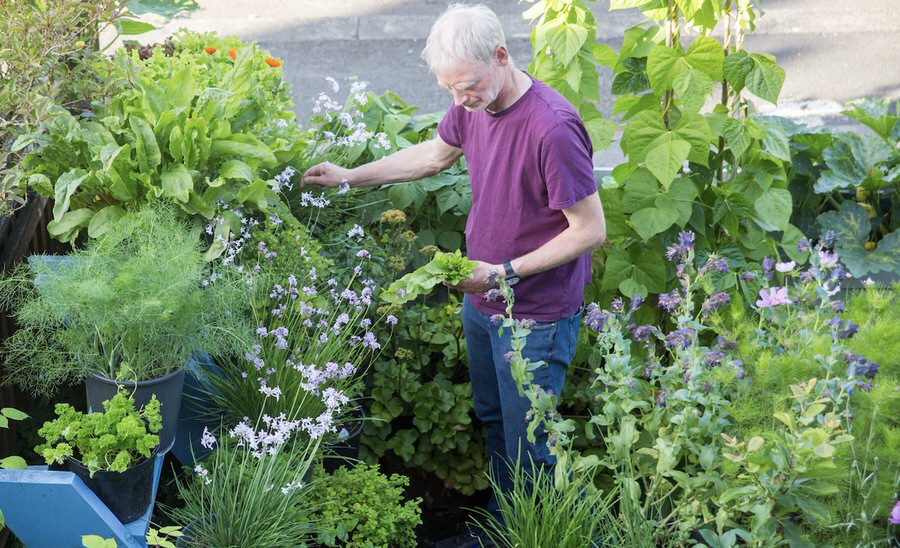
Apart from having fresh herbs and tasty micro-greens, together with salads, vegetables and fruits, Mark found that he got to know his neighbours because passers-by invariably stopped to talk and comment on the bounteous harvests he was able to crop in such a limited space.
His advice was to concentrate on growing high value, easily perishable plants rather than cheap and easily available options found in every supermarket. The benefits of herbs is that they can flavour everyday foods all year round and are easy to grow and require little maintenance.
Mediterranean herbs such as marjoram, lemon verbena, winter savoury, rosemary and thymes are long living and also offer a food source to bees and pollinating insects. Chives, mints, basil and tarragon are also easy to grow in containers and add flavour and enjoyment to food. Included throughout his talk were ideas of how to use these herbs in cooking.
For salad and vegetable foods Mark recommended growing those which are not so readily available and which are generally more expensive to buy. Crops such as mustards, pak choi, rocket, radicchio, courgettes, chillies and mange-tout, together with vertically supported beans against a house wall are all things that Mark has grown successfully in a very limited outdoor setting.
Fruit trees such as apples, can be grown successfully in tubs as can raspberries, blackberries, blueberries and strawberries. Even in winter, container grown chard and kale can provide tasty and nutritious food.
This fascinating talk was illustrated by photographs of Mark’s impressive attempts to grow delicious food in very confined places.
The Chair, Mrs Isabel Ferguson,
Friday, 20 March 2026
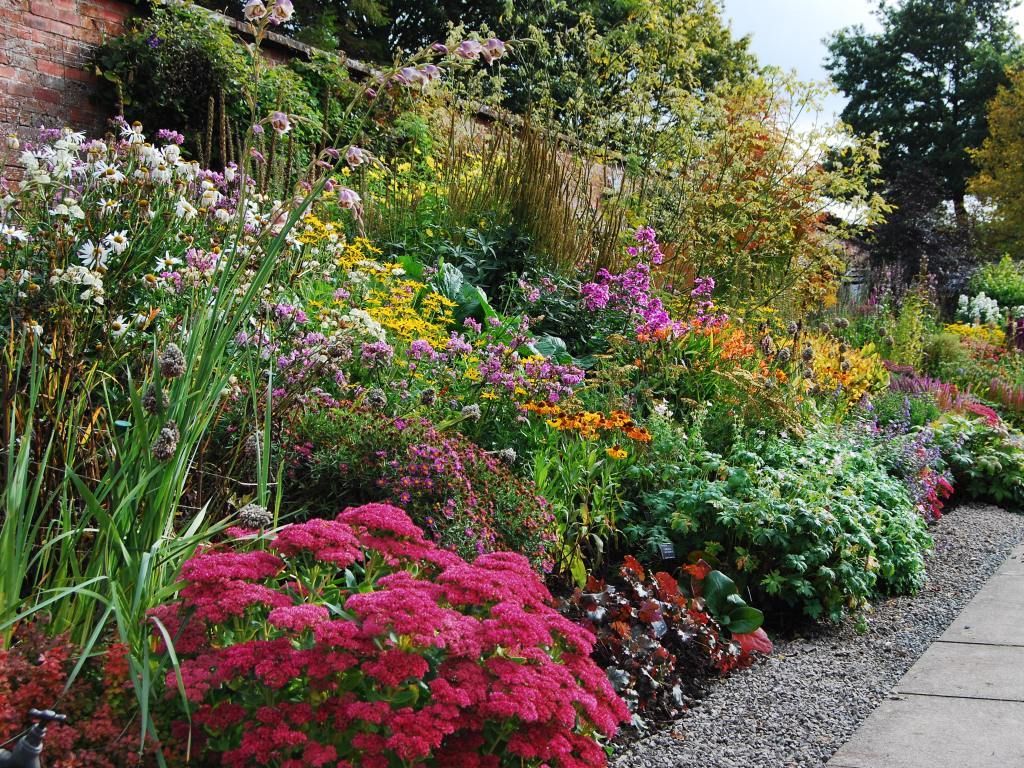
12th March 2026 - AGM & Talk - 'Herbaceous Borders' by Alan Gerrard.
This was our Annual General Meeting. Sixty two members attended; a good turnout on a cold, windy and wet evening! The Chair, Mrs Isabel hosted and committee members gave updates on finance, constitutional matters, and information about forthcoming trips and events. After the business was concluded, Isabel gave a round up of the past year's highlights before introducing the speaker.Mr Alan Gerrard is the chairman of Holehird Gardens in the Lake District, a garden run entirely by volunteers of the Lakeland Horticultural Society. His talk was about Herbaceous Borders.
Alan began his presentation by giving an overview of his life spent developing his skills as a gardener. His first garden was in Aberdeen ( from where his wife hails). Roses are famous in Aberdeen but Alan also noticed another attractive plant growing in his garden, so he carefully transplanted it. It turned out to be Rosebay Willow Herb (aka Wandering Willies)! A move to Milton Keynes provided the location for his next garden which included acers and climbing roses. The family then moved to Vienna for four years and although their home had no garden, the many beautiful formal gardens in Austria provided wonderful inspiration for any gardener. Three years living in Bangkok meant learning to nurture hanging orchids and tend Pomegranate trees! On returning to the U.K. Alan gardened on clay and flint in Northamptonshire for twelve years, honing his skills and knowledge and his love of gardening. As ever,
"A true gardener, like an artist, is never satisfied" H.E. Bates
Alan and his wife currently live in the Lyth Valley in Westmoreland. The valley has a tendency to flood from the nearby River Gilpin which flows on into the River Kent before entering the Morecambe Bay estuary. Alan and his wife have volunteered at Holehird Gardens near Windermere, for the last eight years, tending the East Bed which measures 30 x 6 metres - by 6 meters … a large walled herbaceous border.

Alan spoke about what type of plants could be categorised as herbaceous, because many gardeners include a variety of different plants within a traditional herbaceous border. (They are Generally the term refers to any plants which do not develop woody stems.)
Gertrude Jekyll made this style very popular in the late 19th and early 20th century, using colour and drift planting. Christopher Lloyd copied this fashion at his home Great Dixter as did RHS Wisley and also Holker Hall in South Lakeland.

An initial task undertaken on the Holehird herbaceous border was to systematically remove all perennial weeds. This involved lifting out whole clumps of plants, washing the roots and removing every piece of root belonging to a weed before replacing the herbaceous plant back into the border. Ground elder, soapwort and even rosebay willow herb have been successfully eliminated by this method!!!Alan continued his talk by describing the task of making metal plant supports as well as weaving copious numbers of hazel frames in at least a dozen different styles. These are used throughout Holehird to support large plants. A copice in Arnside provides the raw materials. No matter how many plant labels are made and inserted beside a plant within the herbaceous border, they inevitably ‘disappear’. Visitors to the garden ask many questions and are always happy to offer free advice!
The Chair thanked Alan for his excellent presentation and for bringing a tray of plants which members could purchase.
Marilyn Lowe won the Lotto.
Members were asked to remember to bring cash or cheques to the April meeting if they wish to add their names to the Trip Lists. No seat can be allocated unless paid for in advance. Members take preference over non-members.
The Plant Sale is on May 30th. Members and Villagers are urged to start splitting and/or potting on plants or planting seeds etc., which can be sold at the Sale to boost Club funds.
Monday, 2 March 2026
January & February 2026
The Viaduct Gardening Club met at Down-a-Gate Community Centre in January 2026, to celebrate the Festive Season and welcome in the New Year…. With prettily decorated tables, the members enjoyed a buffet provided by Essen, a local company. Entertainment was led by our Chair, Mrs Isabel Ferguson, who had organised a plant-themed quiz together with a generous free raffle.The February meeting welcomed Mrs Jeanie Jones, who gave an illustrated presentation all about her one-and-half acre garden of Kilnpotlees, Kettleholm near Lockerbie in the Borders.
She showed slides depicting a large range of plants which are in bloom from January to December in the garden she has designed and developed over the last fifty years.
A large variety of unusual specimens are grown by Jeanie from seed and she has travelled the world, meeting other specialist growers: swopping information and resources, all driven by a passion for propagation and a love of flowers and trees.![]()
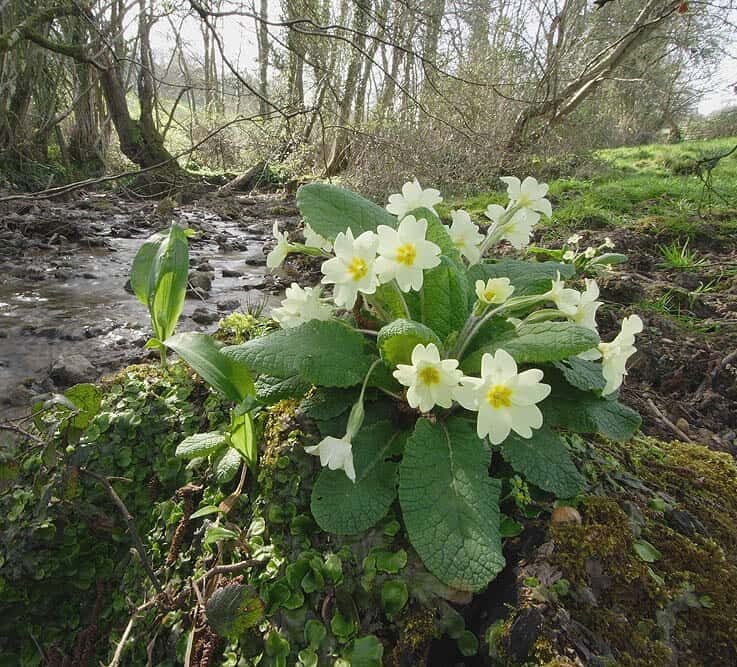
year begins, in her Borders location, by looking out for the first harbingers of spring ….winter aconites, of which she grows several unusual varieties, snowdrops and the beauty of silhouetted garden trees clothed in ivy.February starts with Jeanie caring for her many varieties of meconopsis (which need to be fed and tended) and watching for emerging bluebells, iris, crocus and cyclamen, to name but a few.By March, hellebores should have had their leaves removed in order to admire their floral beauty. Daffodils, primulas (in a vast array of form and colour), rhododendrons, azaleas, dog-tooth violets and other erythroniums, primroses all emerge into bloom. Around Jeanie’s large pond, marsh marigolds and an ancient variegated specimen of skunk cabbage, pulmonaria, and beautifully scented daphne are also in bloom, whilst being protected from the winds blowing across the Solway Estuary, by a large stand of ornamental bamboo .April brings considerable work in Jeanie’s large propagation beds where precious seedlings, cuttings and grafts are nurtured.Scattered around, self-seeded plants appear, (a sign that they are happy), to be enjoyed or transplanted.In the woodland area of the garden there are trilliums, rhododendrons, Himalayan wild rhubarb among a carpet of bluebells.Naturalised orchids, hostas, alliums and iris all herald in June. Clematis flourishes and ornamental trees such as elderflower add their own beauty.Jeanie nurtures several varieties of Buddleia shrubs, loved by butterflies throughout July.Nearby Threve Castle (NTS) has invited Jeanie to collect and propagate specimens of rare trees and shrubs on their property. An activity which she feels privileged to undertake.The Summer season calls for greenhouse work, including a large productive grape vine which requires protection from invading wasps! Vegetables are rotated in the many kitchen beds to feed family and friends.The garden blooms in August and September with outdoor grown eucomis and crabapples and rowan trees.
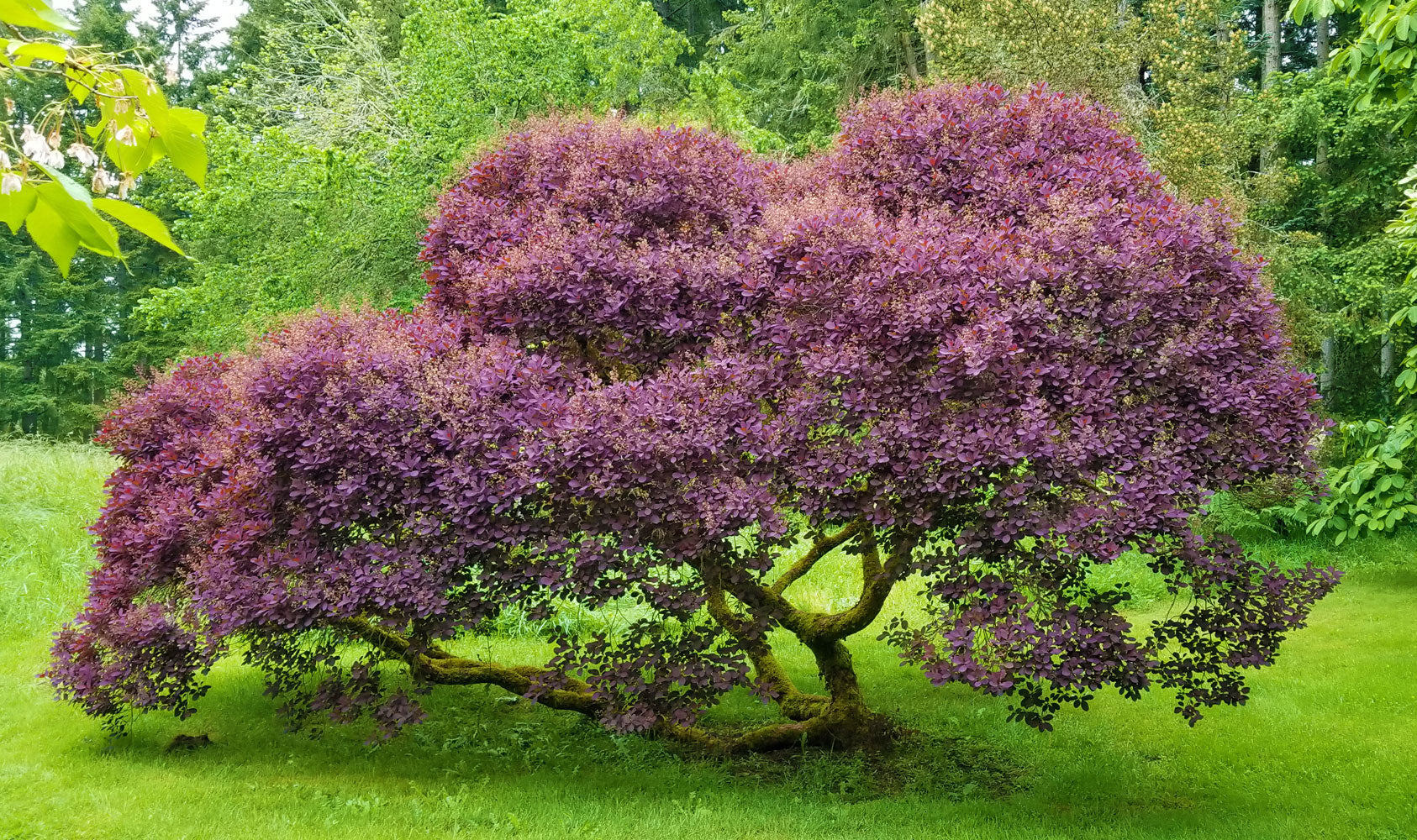
As autumn approaches, mahonias and a Smoke Tree add interest andcolour.
Jeanie enjoys providing a home to several mallard families which have become residents on her beautiful pond. She also has evidence of visiting otters!Overall, the presentation was an amazing annual overview of a garden nurtured and enjoyed by a knowledgeable and dedicated gardener…..a fifty-year long labour of love .The Chair thanked Jeanie for her very interesting talk.Mr Ian Forrest won the Lotto.Next month’s meeting will be the AGM held on 12th March….The speaker will be Mr Alan Gerrard discussing Herbaceous Borders.Visitors are always welcome for a small fee of £3.
Written by Jude Jansen