Saturday, 16 April 2022

"The Low Maintenace Organic Cottage Garden" - Andrew Davenport - 14th April 2022

Andrew in his Garden


 Mr Andrew E. Davenport, (from Gardener’s Cottage   Plants, Bingfield, just north of Corbridge), was the   speaker at our April meeting.


https://www.gcplants.co.uk/


 Once upon a time, back in the 1930’s, there were two   ladies; Lady Eve Balfour and Miss Maye Emily Bruce   MBE. These two ladies were passionate about the   sustainability of the soil both in this country and around   the world.
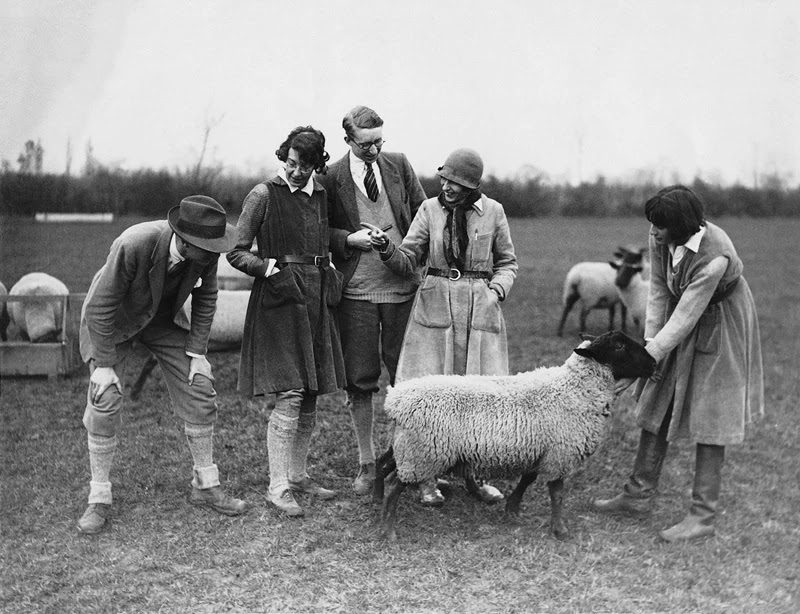

Lady Eve & Other Founders with a ram!


Their mission was to promote the necessity of replenishing and reinvigorating soil using organic materials to improve its biodiversity. They later became founder members of the Soil Association.

Miss Bruce was the innovator of the ‘Quick Return’ composting method and her main aim was to,

Give back life to the soil, and thus eventually abolish disease

in plant, animal and man”.


She developed a mix of herbs, which once dried, were mixed with water and used as an activator on garden and kitchen waste; thus turning it into useable compost in a matter of weeks.

https://www.soilassociation.org

Some years ago Andrew had been given a book, published in 1949, entitled Organic Husbandry. A Symposium”. This anthology had one common theme of interest….a belief in organic methods of gardening and farming as a means of survival. He was captivated by this subject and researched every aspect of compost making especially the ‘Quick Return’ method promoted by Miss Bruce.

One thing led to another and Andrew decided to write his own book,

Andrew uses those fundamental principles promoted by Miss Bruce, ensuring that her methodology and research are preserved for future generations. He has redesigned his own garden and has established a business; selling his own organically home-grown cottage garden. He gives talks, runs courses on organic gardening and offers a garden maintenance service.

With slides Andrew illustrated how he completely redesigned his own garden plot. These ably revealed the floriferous results of his organically grown and composted flower and vegetable beds. It is clear to see the benefits and sustainability of this methodology.

Written by Jude Jansen

Compiled for blog by Trish Rodgers

Photos – various / Internet


Sunday, 20 February 2022

"Poles Apart" - David Rankin - 10th February 2022


We are delighted to reconvene our talks in person, as Covid’s Omicron variant dims its attack.


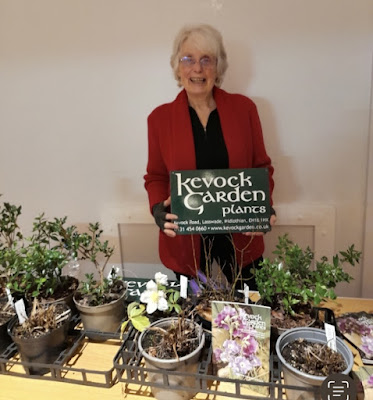
And how lucky we were to welcome Stella & David Rankin from Kevock Gardens & Nursery in Scotland. Kevock offers;

plants for your rock garden, woodland or damp area,as well as a selection of herbaceous plants, and trees and shrubs. We have ground cover plants and some that cope in dry shade, as well as many that are easy to grow. You can take a look at our specialities. We have also put together some collections of plants that we display together at the shows.”

AWARDS - Chelsea Flower Show Gold medallists 2013, 2014, 2015, 2016, 2017, 2018 & 2019. Farrer Trophy for best Alpine display at an RHS show 2016, 2017, 2018 & 2019

Gardeners’ World Masterclass 25th June 2021 - Meconopsis

https://www.bbc.co.uk/programmes/p09mr8hr

https://www.kevockgarden.co.uk

As well as keen botanists and nursery owners David & Stella combine these activities with worldwide expeditions to mountainous regions.

David’s talk compared and contrasted plant species from different locations that are geographically ‘poles apart’.

He focused particularly on Patagonia & its opposite number – the mountains and valleys of South West China. And of course both these areas are active zones of tectonic plate friction. 

Volcanic soils, huge mountainous contrasts of precipitation and temperature differentials inevitably challenge cultivation of plants from these areas in the UK’s even climate of dampness and temperature with rich soils.


Some plants species are unique to a specific area while others are found in both the northern and southern hemispheres


e.g. Pollination by humming birds is unique to the Americas. It is here that plant species with long, bright tubular flowers are found.


          Below is Desfontania spinosa


 © National Audubon Society


VGC will be visiting Kevock Gardens this summer.

&

Kevock will be showing at Harrogate’s Spring Flower Show 21st to 24th April 2022

https://www.flowershow.org.uk

Compiled by Trish Rodgers

Photos – various / Internet / Paula Sillkstone


Tuesday, 16 November 2021

"Bulbs, Glorious Bulbs" - Karen Phillips - 11th November 2021


Members had already had the opportunity to pre-order a variety of bulbs from the  catalogue, which Karen bought with her….all beautifully packaged up and individually labelled. She also came with a huge array of bulbs for sale, including daffodils, tulips, alliums, fritillaries, camassias, muscari, crocuses, dogtooth violets, iris, and many more. Lots of the tulips and daffodils came attractively packaged as pre-selected, colour co-ordinated stunning collections. Amongst other items for sale were a selection of bulb planting tools, soil thermometers and gardening gloves.

Karen described how she and her husband had purchased Linnels Farm eleven years ago as a very run down property, but which they have since gradually repaired, restored and converted. It is now their home with farm buildings used as a venue for a variety of courses, and cottages to let. They have also developed the surrounding land into beautiful gardens, including an orchard and apiary.


Karen illustrated her talk with slides showing examples of the many bulbs which she sells. Due to the recent weather, pandemic upheavals and Brexit, the ordering of bulb stock from the Netherlands, has been fraught with difficulties. Some of the 90,000 bulbs Karen orders each year were below standard, due to poor spring weather conditions, and this led to late deliveries and then a frantic rush to dispatch bulbs to her many U.K. customers.


The theme of the presentation was divided into what types of bulbs will naturalise easily, what bulbs are good for tubs and container displays, and which bulbs are best for picking and favoured by florists. She also gave tips on propagation, care and the best ways to plant bulbs.

Report by Jude Jansen


Other Top Tips from Karen:

1. Cut scented narcissi bunched & held together around their heads by raffia make for a stunning table decoration. Their turgid stems & tied raffia keep the arrangement upright within a saucer of water. The arrangement looks & smells great for at least 2-3 days

2. Remember bulbs can not ‘polar navigate’ so do plant them in their correct growth orientation; viz. roots down.

3. Fritillaries – their bulbs don’t have a ‘nose’ and instead the stem head is inverted. 

This is fine for their climate of origin (Asia & Middle East) but not for the soggy UK. Instead plant the bulb on it’s side to prevent rotting. For a startling late spring show why not try Fritillaria persica (the Persian Lily) at 90cm and which naturalises readily.


4. So what’s a good bulb size?

As you can imagine, the quality standard you should apply to various flower bulbs depends on species, but it also depends on the variety you choose. Here are a few basic guidelines that you can apply:

Tulips
Landscape’ grade, or smaller bulbs should be at least 10cm in circumference. They produce relatively small blooms that are a bit bigger than a golf ball. If you choose smaller bulbs, be sure to mass plant them. For really good flowers, your tulip bulbs should be 12cm or more.

[Karen is clear that the tulip needs to have a minimal

circumferential diameter of 9.5cm to flower]

The larger bulb circumference produces an astounding difference. The blooms are at least as big as tennis balls and usually even larger (depending on the variety). The species type tulips are an exception to the rule and have naturally smaller bulbs and smaller blooms.

Daffodils and Narcissus 
There’s a lot of variation in this group of plants. As a rule, the dwarf varieties have smaller bulbs and the big trumpet varieties are larger. Bigger is always better regardless of variety, and in general, top-grade bulbs will be 14-16cm.

Amaryllis
Amaryllis are magnificent in bloom – but only when the bulbs are big enough! You’ll get a fabulous show, bigger flowers and more blooms with bulbs 34cm or more in diameter.

Hyacinths
These scented beauties should be at least 16m, but for pot forcing 17-19cm is better.”


https://www.dutchgrown.com/blogs/planting-tips/how-flower-bulbs-are-measured

Complied by Trish Rodgers


Monday, 8 November 2021

November - a time of and for Remembrance...

Onward progresses the season of Autumn; through days of mists, fruitful harvests, Hallowe'en & Bonfire Night. Leaves continue in their glorious colour transformations before their final descend: reminding us of that special time of remembrance at 11am on the 11th of  Novemeber...


Countrylife's article by Jack Watkins is well worth a read. It was the field surgeon John McCrae who penned those famous lines, whilst attending the wounded soldiers in the aftermath of the 2nd Battle of Ypres;

"In Flanders fields the poppies blow                             Between the crosses row on row..."

Though not native to Britain the common poppy is thought to have first arrived as seeds within the corn-crop imports of Iron Age farmers 5,000 years ago.

Poppy seeds germinate on disturbed soil, typically after ploughing or tilling, which is why it thrived on the battlefields of the Western Front during WWI.

"Poppies produce 15,000 - 20,000 seeds each, which can survive for almost a century".


Assyrians called poppies "the daughters of the field"
and the Roman godess of food plants, Ceres, wore a wreath of them.


This is an interesting book about memories and

mindfulness through the gardening calendar 

- a great stocking filler perhaps?

Monday, 18 October 2021

Gardening for the Future - Doug Stewart - 14th October 2021


Doug Stewart travelled from Hull to talk to us. He summarised his career as a professional horticulturalist, culminating as a lecturer at degree level. He is currently a consultant for Garden centres in the North of England and also works in conjunction with the RHS.

His presentation was interjected with amusing anecdotes and jokes which kept his audience entertained.

Some people look for beautiful places, other people create beautiful places

…..these people are called gardeners.”

The spelling of ‘gardening’ could also be spelled ‘guardening’ because the creation of a garden means that we are ‘guarding’ the earth around us.

During the lockdown period, it is estimated that 30 million British people gardened extensively, fed wild birds, built ponds and watched nature in a way they may not have done previously.

Gardens become…. Guardians of the Environment.

It is acknowledged that this gardening activity supported and improved the mental health and well- being within the population during this stressful time. By closely watching the seasons come and go, and connecting to their own spaces, many people drew strength from their gardens.

Gardens become….. Guardians of Wellness.

There is a growing movement towards the ‘greening’ of our urban environments. Parks are being improved, green spaces utilised for local people, and community enterprises are springing up across our Nation. One example is in Stockton-on-Tees, where much of the urban centre has been demolished and reconfigured to make it a river facing park for the community enjoy.

Parks and gardens become….Guardians of the Community.

Doug Stewart then discussed how the way we garden in the future will have to incorporate changes. Although these changes may be challenging, overall they will improve the environment in which we live.

Plastic use is something we are all aware of: using less and recycling more is already in our minds. However, the inclusion of slow release fertiliser used frequently by commercial plant nurseries and in our own gardens is actually stored inside plastic capsules. These break down slowly within the soil and research has discovered that these minute particles, ingested by worms, subsequently damage them.

Commercial compost of the future will now become peat free. Several alternative options were discussed; bracken based composts (e.g. our local company Dalefoot ) and those of forestry residue. Timber companies are developing the by-product of ‘brash’ as a compost. (Jenkinson’s Timber in Cumbria). Worm composts are also being trialled for commercial use. Finally councils are investing in the reuse and processing of household waste.

There has been a substantial growth in the use of chemicals and pesticides in recent years. These products are now going through rigorous testing and as a consequence it is likely that in future there will be far fewer ‘over-the-counter’ options on the market.

Written by Jude Janzen


Chelsea Flower Show in Autumn 2021

Did you get a chance to visit to this extraordinary show? Well Jude Jansen did. It's impossible to choose which of Jude's photos to include, but here goes...

Glorious Late Summer & Harvest Time

Arit & Nick - in action for Gardeners' World - BBC

Pastel Delights

Fame at last!


Hartside Nursery

That famous hospital